
Industrial Emergency Lighting: 5 Common Mistakes to Avoid in Harsh Environments
Industrial emergency lighting plays a critical role in keeping factories, warehouses, and industrial facilities safer when the main power supply fails.
But choosing the right emergency light is not always as simple as comparing wattage, battery capacity, or price.
In demanding industrial environments, moisture, corrosion, temperature changes, and maintenance conditions can significantly affect long-term reliability.
For electrical contractors, facility managers, and lighting distributors, understanding these challenges before purchasing can help prevent expensive mistakes.
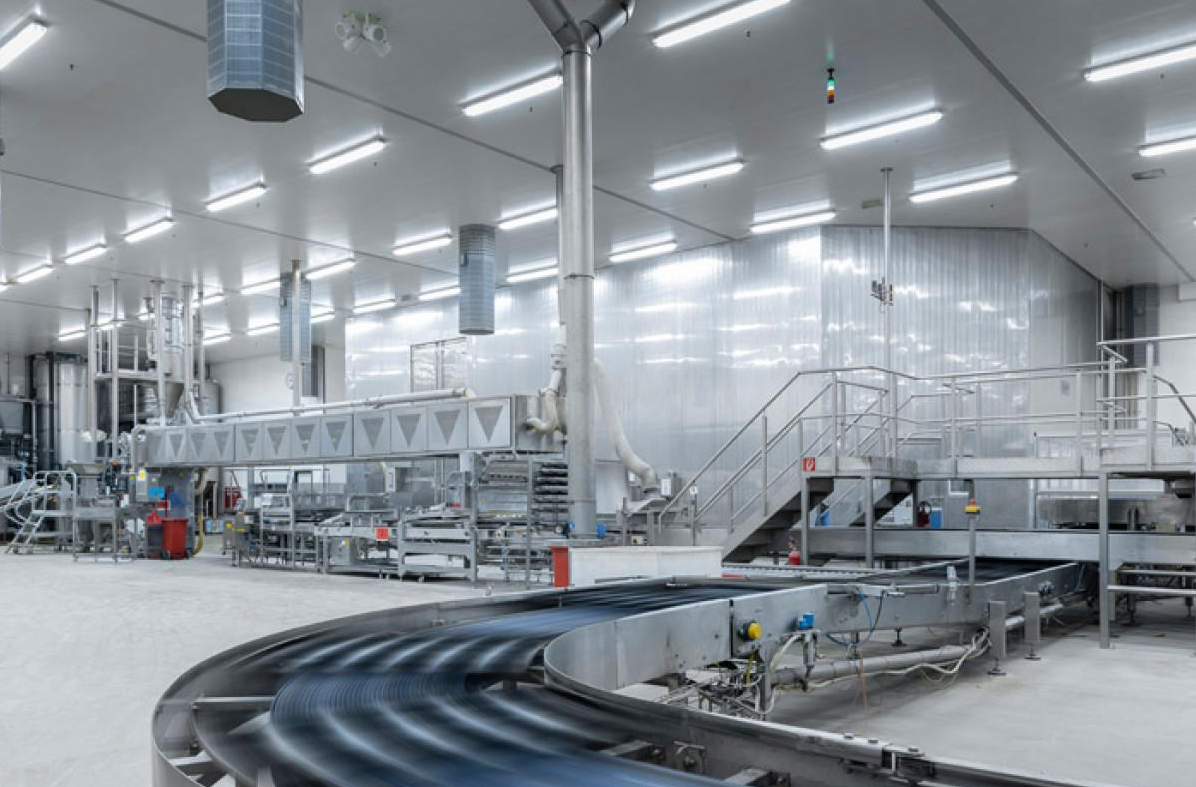
Here are five common mistakes to avoid when selecting industrial emergency lighting.
1. Choosing an Emergency Light Based on Price Alone
One of the most common purchasing mistakes is focusing only on the initial cost of an emergency light.
Two emergency lights may look similar and offer the same rated power, but their construction and performance can be very different.
For example, consider two products:
- A conventional emergency light with a standard plastic enclosure and basic steel screws.
- An industrial emergency light with a fiberglass enclosure, 316 stainless steel external screws, and a moisture-resistant design.
The initial purchase price may be different, but so can the long-term maintenance requirements.
For industrial facilities, especially those operating continuously, replacing failed emergency lights may involve additional labor, access equipment, and production disruption.
What buyers should consider:
- Enclosure material and construction
- Quality of external screws and mounting hardware
- Battery performance and replacement requirements
- Environmental protection
- Availability of replacement components
- Maintenance and inspection requirements
The lowest purchase price does not always mean the lowest lifetime cost.
2. Underestimating Moisture and Corrosion Risks
Not all industrial environments are dry and clean.
Food processing facilities, industrial workshops, utility areas, and some warehouses may experience condensation, moisture, cleaning operations, or corrosive conditions.
These conditions can affect emergency lighting in several ways.
Moisture entering the enclosure may damage electronic components. Corrosion can weaken exposed fasteners, while unsuitable sealing materials may deteriorate over time.
This is why waterproof emergency lighting requires more attention than simply selecting a product advertised as waterproof.
Buyers should verify the complete enclosure design, including:
- Cable glands and cable entry points
- Enclosure gaskets and seals
- External mounting hardware
- Actual IP test results
- Compatibility with cleaning chemicals and operating temperatures
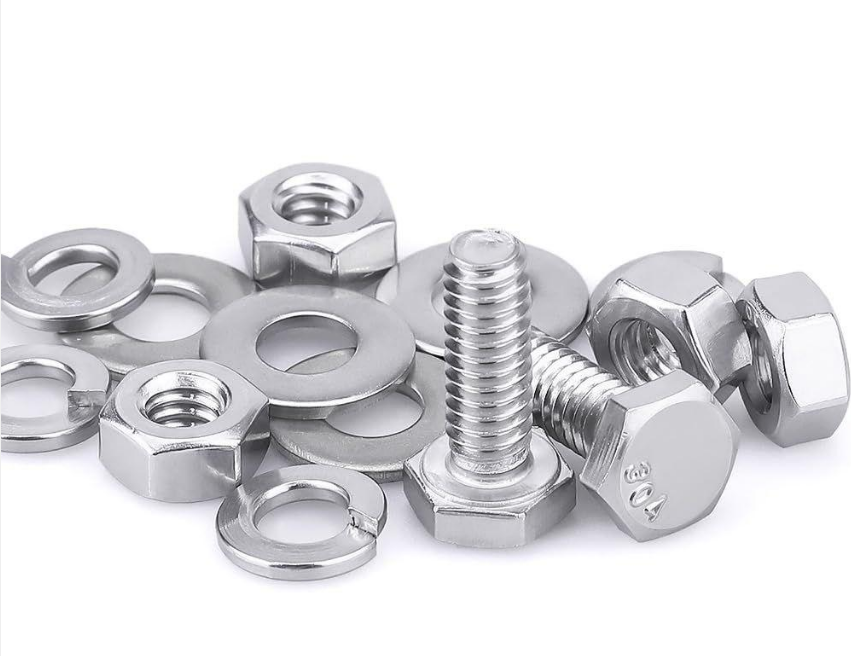
For example, 316 stainless steel external screws offer improved corrosion resistance compared with ordinary carbon steel screws in many moisture-prone environments.
However, stainless steel fasteners alone do not make an entire luminaire corrosion-proof.
A useful purchasing question is:
“Has the complete emergency lighting assembly been evaluated for the actual installation environment?”
For areas subject to frequent washdown, buyers should also confirm the required water pressure, temperature, and chemical exposure before choosing a fixture.
3. Ignoring the Importance of Enclosure Materials
The enclosure is one of the most important components of an industrial emergency light.
Its job is not simply to hold the electronics. It also provides mechanical protection and supports the environmental sealing system.
Common enclosure materials include:
- ABS and other engineering plastics
- Aluminum
- Fiberglass-reinforced materials
- Stainless steel
Each material has advantages and limitations.
Fiberglass enclosures can provide a useful combination of mechanical strength, electrical insulation, and corrosion resistance, depending on their resin formulation and manufacturing quality.
For industrial emergency lighting, fiberglass may be an attractive option where a durable non-metallic enclosure is preferred.
However, buyers should not assume that all fiberglass housings offer the same performance.
Material formulation, UV resistance, temperature capability, flame performance, and chemical compatibility should be checked against the project requirements.
The right enclosure material depends on where the emergency light will be installed, not simply how strong the housing looks.
4. Selecting the Wrong Emergency Power and Backup Duration
A common misunderstanding is that a higher-wattage emergency light will automatically provide better emergency illumination.
In reality, emergency lighting performance depends on several factors:
- Actual emergency luminous flux
- Beam angle and light distribution
- Mounting height
- Spacing between luminaires
- Battery capacity
- Emergency operating duration
For example, a 40W emergency light may be appropriate for a particular industrial area, but the wattage alone cannot determine whether the required emergency illumination levels will be achieved.
Photometric calculations and the applicable local standards are necessary.
Emergency duration is another important consideration.
Some projects specify 90 minutes, while others require three hours or longer, depending on local regulations and operational needs.
When comparing emergency lights, buyers should ask:
Does the product maintain its specified emergency performance for the entire rated duration?
A product advertised with a three-hour backup duration should be evaluated under its actual emergency operating conditions.
Battery quality, charging performance, temperature, and aging all influence long-term emergency lighting reliability.
For facilities with extended backup lighting requirements, a longer-rated emergency duration may offer useful design flexibility, provided the performance is properly verified.
5. Overlooking Maintenance and Long-Term Reliability
Emergency lights may remain unused in emergency mode for long periods.
This makes regular inspection and testing particularly important.
A fixture can appear normal during daily operation but fail to deliver its rated emergency performance when a power interruption occurs.
Common maintenance concerns include:
- Battery capacity degradation
- Charging circuit problems
- Water ingress
- Corroded fasteners
- Loose cable connections
- Reduced LED output
- Failed emergency changeover operation
Industrial buyers should consider how easily the product can be inspected, tested, maintained, and repaired.
A reliable emergency lighting system requires more than good components. It also requires correct installation, appropriate testing, and planned maintenance.
What Should Buyers Look for in an Industrial Emergency Light?
Before approving an emergency lighting product, use the following checklist:
| Key Requirement | What to Verify |
|---|---|
| Emergency Output | Actual emergency power and luminous flux |
| Backup Duration | Verified runtime under emergency conditions |
| Enclosure Material | Suitability for the installation environment |
| Water Protection | Tested IP rating and sealing construction |
| Corrosion Resistance | Housing, screws, brackets, and cable fittings |
| Battery System | Chemistry, capacity, charging, and service life |
| Light Distribution | Beam angle and photometric performance |
| Compliance | Applicable electrical and emergency lighting standards |
| Maintenance | Inspection, testing, and replacement access |
For European projects, IEC 60598-2-22 is an important reference for emergency luminaires, alongside the applicable national requirements and installation standards.
A Practical Example: 40W Industrial Waterproof LED Emergency Light
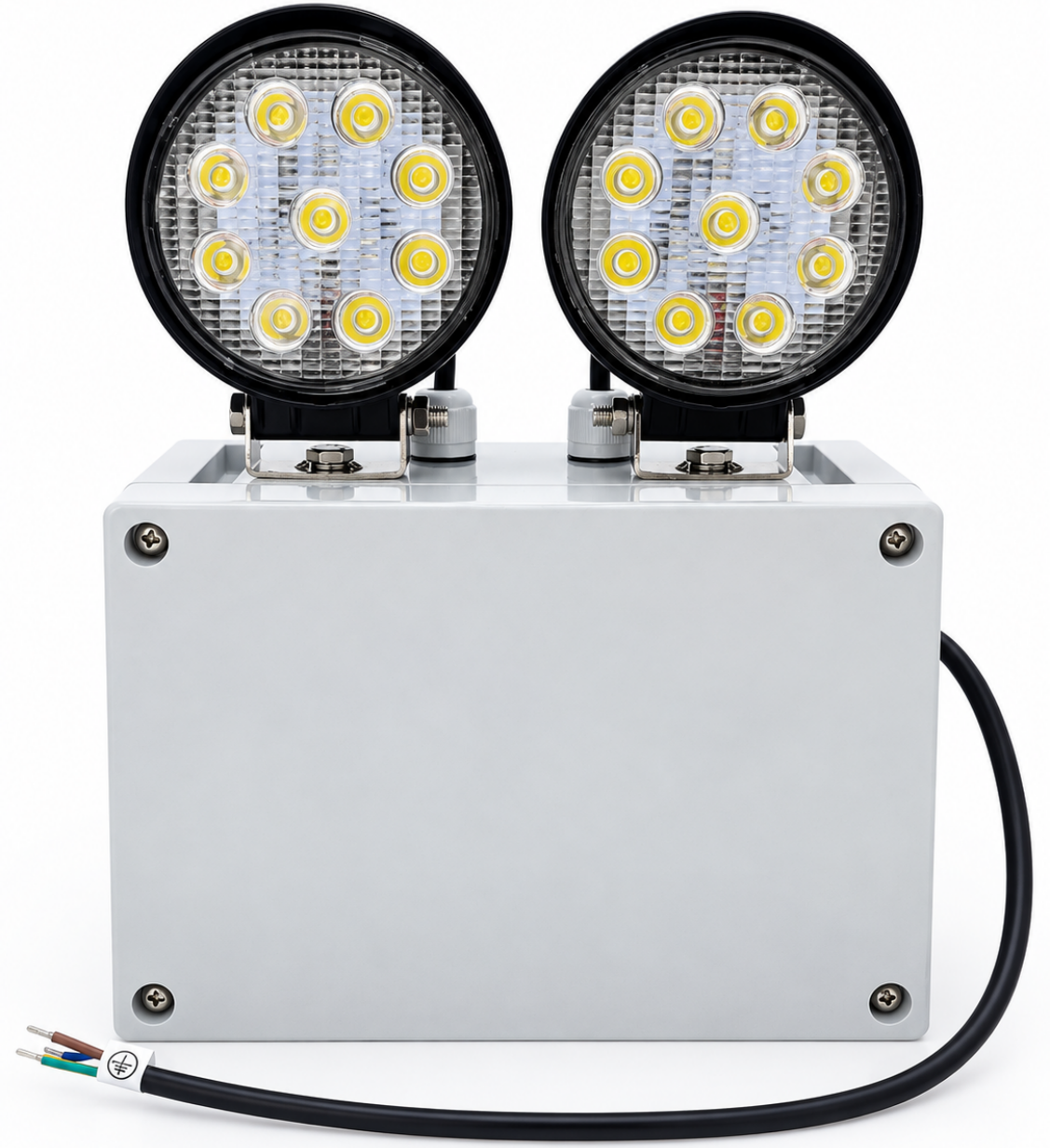
For industrial projects requiring a higher emergency output and extended backup duration, Yistar Lighting has developed a 40W dual-head industrial emergency lighting solution.
The product features:
- 40W rated emergency output
- 210-minute (3.5-hour) specified emergency duration
- Fiberglass enclosure
- Waterproof enclosure design
- 316 stainless steel external screws
- Two adjustable LED lamp heads
- OEM and ODM customization support
The design focuses on combining extended emergency operation with durable industrial construction.
It may be considered for factories, warehouses, industrial utility areas, and selected food processing facilities, subject to the required ingress protection, photometric performance, and project compliance checks.
Final Thoughts
Industrial emergency lighting should never be selected based on price or wattage alone.
The actual installation environment, enclosure construction, emergency duration, light distribution, and maintenance requirements all influence long-term performance.
For distributors and project contractors, asking the right technical questions before purchasing can reduce the risk of choosing an unsuitable product.
Looking for an industrial emergency lighting solution?
Yistar Lighting provides LED lighting manufacturing and OEM/ODM support for industrial lighting projects.
Explore our 40W Industrial Waterproof LED Emergency Light or contact our team to discuss your project requirements.
Email: sales@ yistarlight.com


